Local homeowner notes
Getting to Know an Existing Bradenton Pool Area
When you inherit a pool area with a home, its history can be less obvious than its appearance. A fresh-looking finish may sit beside older mesh, and a previous owner’s furniture layout may conceal awkward access. For Bradenton homeowners, the useful starting point is a small property record: what exists, what is known about it and what still needs checking. That record can guide maintenance decisions without presuming that an older enclosure needs replacement.
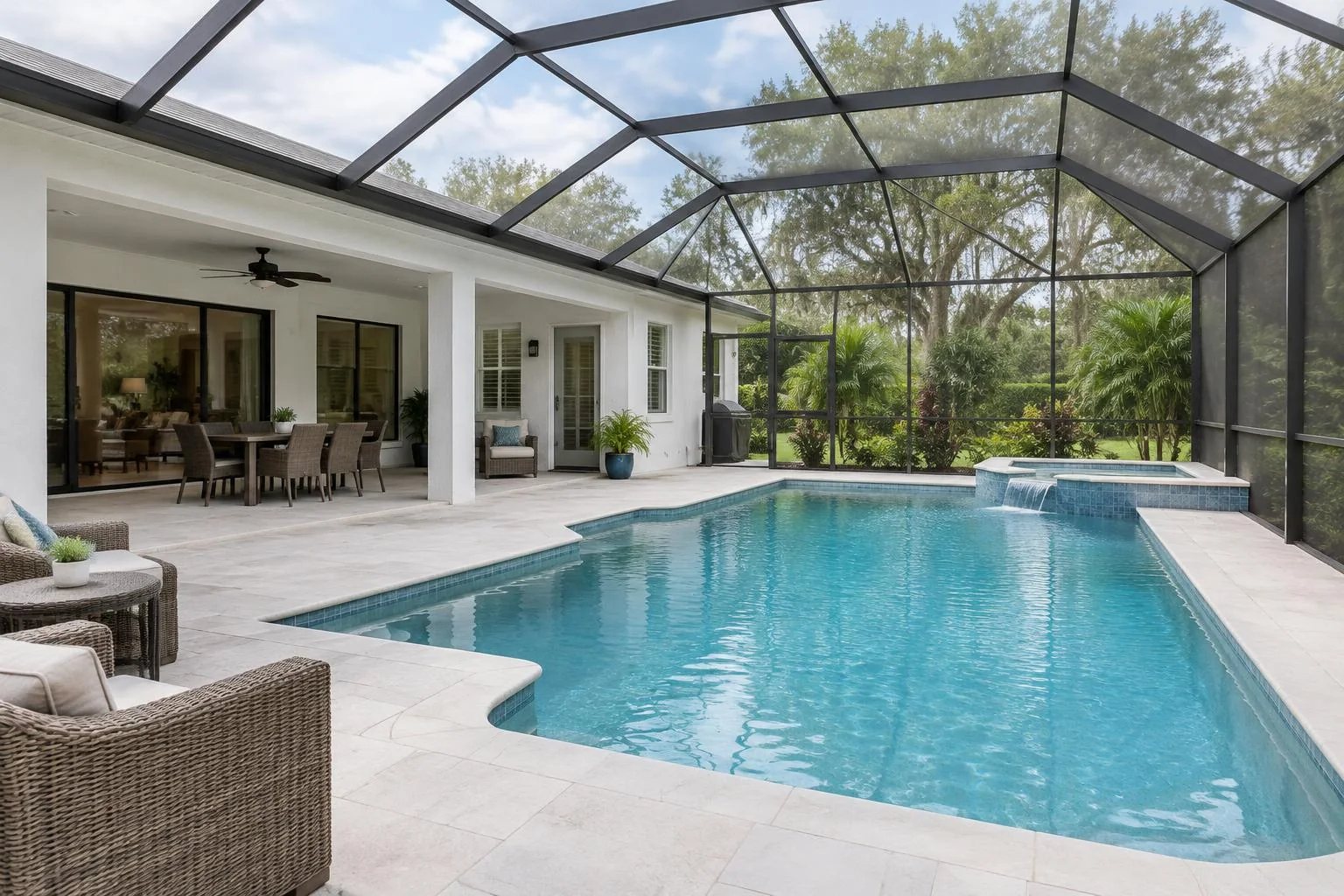
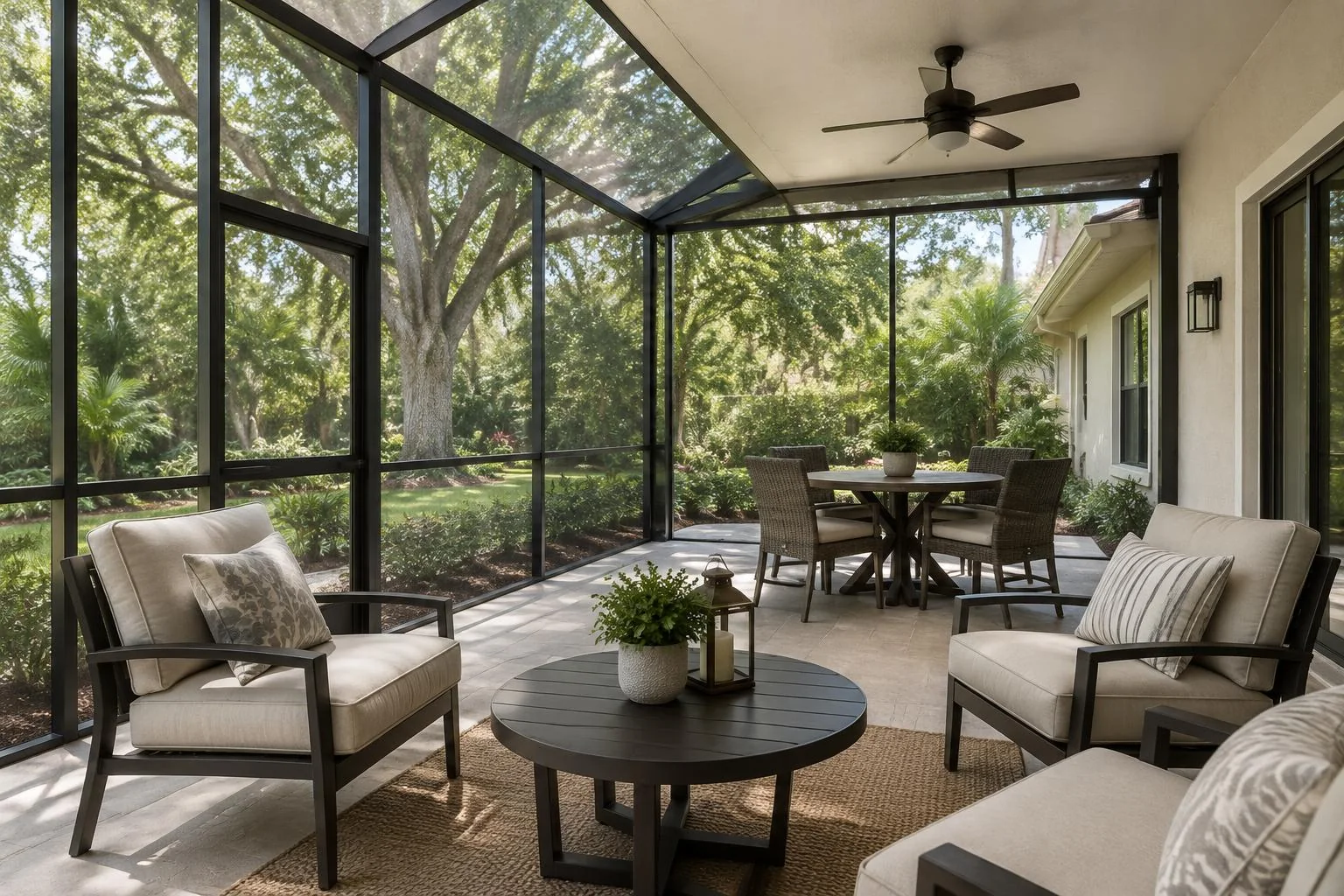
Illustrative outdoor-living imagery — not a company project or a photograph of a specific city.
Build a record before building a wish list
Start with documents already available to you: purchase records, any enclosure drawings, previous invoices and permit numbers. Keep dates attached to individual pieces of work rather than assigning one age to everything. A screen replacement, frame finish project and original installation are different events. If there is no paperwork, write “unknown” instead of estimating an installation date from the style of the house. Take a simple set of photographs from accessible ground-level positions. Include the house connection, enclosure doors, seating areas and the route around the pool. Add close-ups of specific concerns and label their locations. The purpose is not to make a technical inspection report. It is to give yourself and anyone advising you a shared reference, especially if several changes have happened at different times.
Know which office can answer the next question
The City of Bradenton maintains a Building and Permitting Division with online permitting services. Manatee County also has its own permit system, including application information and permit searches. Before following either process, confirm the jurisdiction for your property. Do not assume that a Bradenton mailing address alone tells you which office should answer a question about an enclosure.
When asking for records, describe the existing structure and the proposed change separately. “There is a screened pool enclosure, and I am considering changing its footprint” gives more useful context than “I need pool work.” Ask which records are available and what information the office needs to advise on the proposed scope. Avoid applying a checklist for new construction automatically to a limited screen issue; equally, do not assume work is exempt because a neighbor did something similar.
Read water information at the property level
Bradenton’s official floodplain guidance identifies past areas of concern along the Manatee River and Wares Creek, while explicitly warning that its list is neither a certainty of flooding nor a complete inventory. That distinction matters for homeowners. A familiar street name can prompt a closer look, but it cannot establish the conditions at your own pool deck or predict what a particular storm will do.
Use the city’s linked mapping resources and ask the relevant office about your address when planning changes. Keep this research separate from the screening decision: mesh is not flood protection, and changing panels does not answer drainage questions. If you have observed standing water, record where and when it occurred without guessing at the cause. Seek suitable advice rather than redirecting runoff or changing deck levels on the strength of a general web article.
Separate mesh, frame and movement through the yard
An existing enclosure can raise three different concerns at once. The mesh may have visible tears; the frame finish may look worn; and the doors may be poorly placed for the way your household now uses the yard. List those concerns independently. One project might address more than one, but a cosmetic improvement should not be presented as a structural repair, and fresh screening does not change an inconvenient footprint.
Observe door operation without forcing anything that binds. Note whether a chair, storage box or planter blocks the usual route rather than blaming the enclosure layout immediately. Keep equipment access and everyday walking routes in mind when rearranging furniture. If a member appears displaced or the structure seems unstable, stop using the affected area and obtain an assessment. Do not climb onto the roof panels to check their condition.
Choose priorities that match the household
Once the record is assembled, identify your most important outcome. It might be closing an unwanted opening, improving the view from a dining seat or understanding whether the existing structure is suitable for further work. Those outcomes are not interchangeable. Ask for explanations that connect the suggested scope to your observations, and distinguish what is necessary for the proposed work from optional appearance changes.
If several scopes are being considered, ask how they relate and whether one decision depends on another. Keep a copy of the agreed description rather than relying on a broad label such as “pool cage renovation.” A clear description helps you compare proposals on the same basis. It also gives you permission to defer optional work when the evidence does not support doing everything together.
A practical next step
A good first outcome is clarity, not necessarily construction. Knowing what you have, which records are missing and which concern matters most puts the next decision on firmer ground. For a service-specific next step, the Bradenton page explains All American Renovations’ enclosure services from its Venice base. Keep your property notes alongside that information so the conversation stays focused on your home rather than a general assumption about Bradenton enclosures.
Explore Bradenton enclosure services