
Village-by-village homeowner guide
Planning Everyday Outdoor Living in Lakewood Ranch
Lakewood Ranch is a collection of villages, not a single set of instructions for every backyard. Planning a screened outdoor space is easier when you identify the requirements for your own property and describe how you want the area to function. Start with the address, the responsible association or manager, and the everyday activities that matter to your household. A neighboring village’s experience can be useful context, but it is not your project checklist.
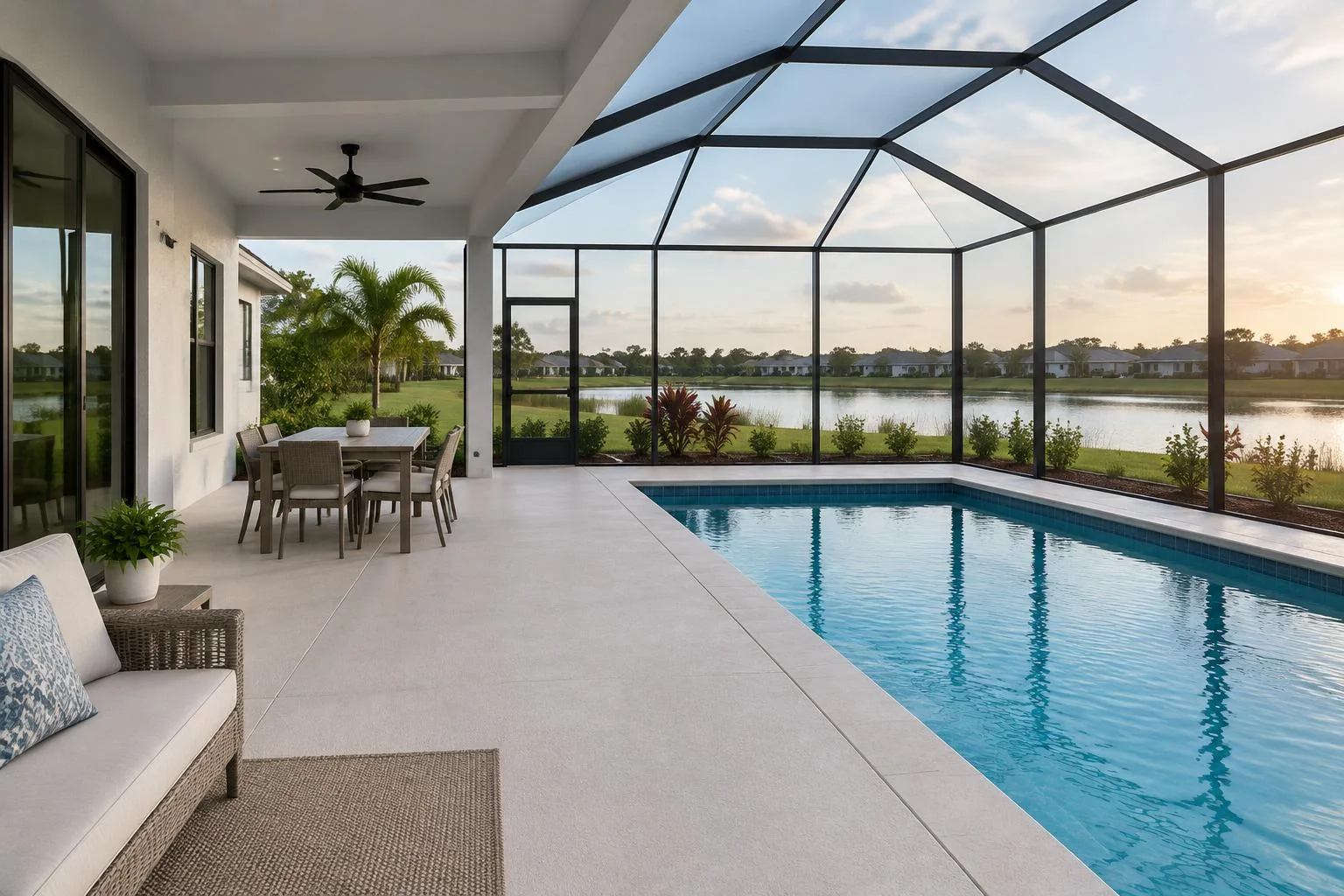
Illustrative outdoor-living imagery — not a company project or a photograph of a specific city.
Build an address-specific information folder
Lakewood Ranch extends into Manatee and Sarasota counties. Confirm the county for your address before collecting building guidance, then contact the responsible public department. The official community FAQ provides general community information; property-specific questions need an address-level check. Keep the address and county with your household records so another family member can find the same starting point when a question comes up later.
In the same folder, keep the current association contact, governing documents and any property survey or existing enclosure plans you can locate. Label documents with their dates. A packet inherited from a previous owner may explain what happened at that time without showing what is required now. The object is not to create paperwork for its own sake; it is to avoid making design decisions from incomplete or mismatched instructions.
Ask the village question before assuming a process
Community requirements can vary by village, association and type of work. Ask the manager or association responsible for your property whether the proposed change needs review and which current documents apply. Be specific about whether the idea involves adding an enclosure, changing framing, replacing screening or changing a visible finish. Do not assume those activities are all treated alike, or that a rule found for another village applies to yours.
Find the current instructions for your village rather than relying on a form passed along by someone elsewhere in the community. Ask who is responsible for submitting a request, what information is needed and whether the response has conditions you should retain. Having those answers in writing keeps a household preference from becoming a design assumption before the relevant people have reviewed it.
Keep community review distinct from public building requirements. An association response does not replace whatever county review may apply, and a public permit does not establish compliance with private restrictions. Do not assume a contractor handles association approvals. Ask what information each participant can provide, and retain the written responses so the proposed work, documents and decisions stay aligned.
Look at the setting shared with your neighbors
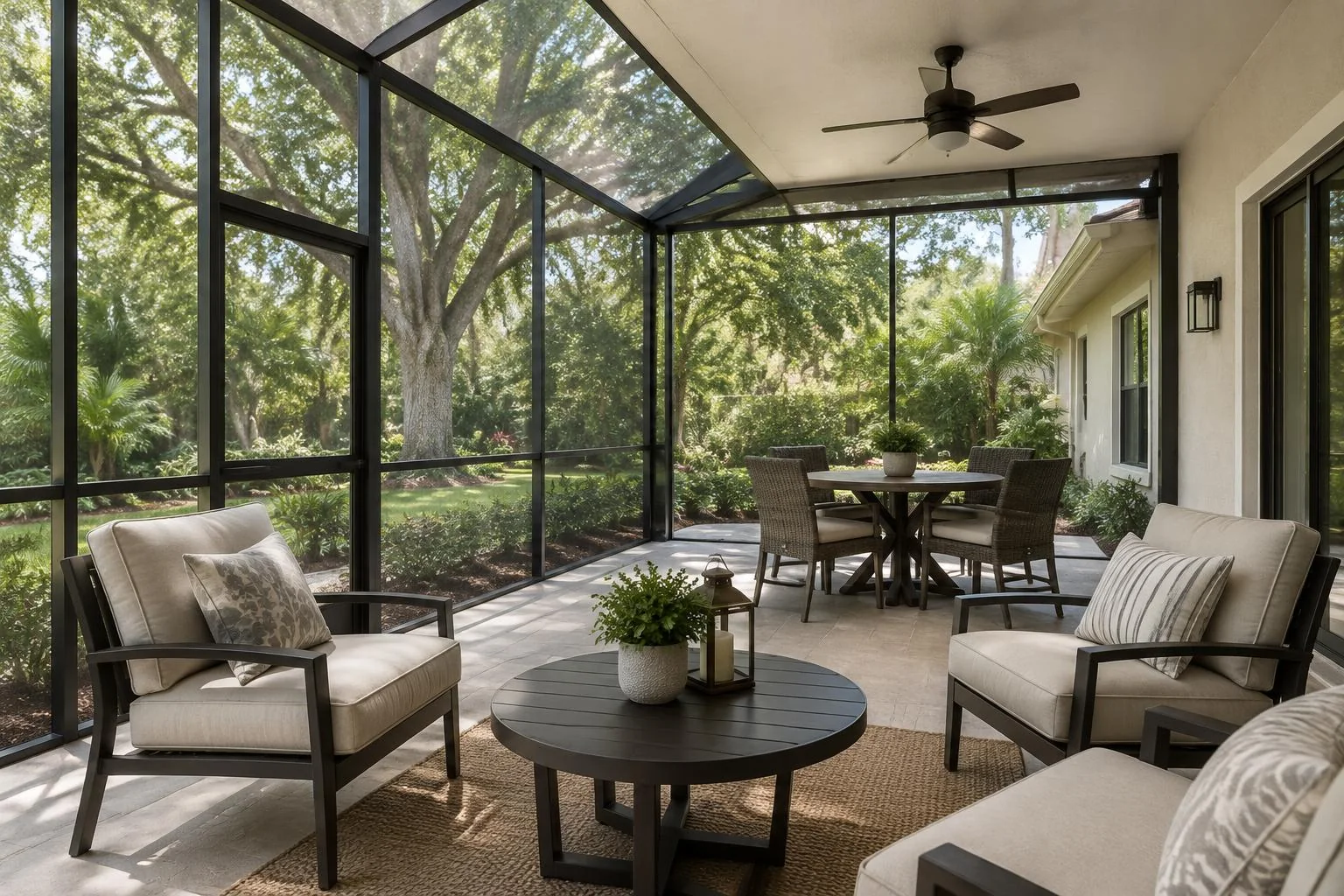
A lanai is part of the private home, but its outlook may include nearby houses or a landscaped area beyond the property. Decide which part of that outlook matters to you and where you prefer to sit. Being close to a shared landscape does not make it part of your own project. Check the boundaries in the available property documents before planning anything that extends beyond the outdoor area already in use.
Consider the view from both directions when privacy is a priority. Furniture placed deeper under existing cover may feel different from seating close to the screen line. Ordinary screening should not be assumed to create a private interior room. Household arrangements can be tried first, while any exterior change can be described separately to the people responsible for your property’s requirements.
Keep village advice tied to its source
A neighbor can be a helpful person to ask about finding a contact or locating a document. Record where the advice came from and whether it concerns the same village, property type and kind of change. If the answer involves a rule or review procedure, follow it back to the current written source. This keeps informal experience useful without asking it to stand in for the instructions applicable to your address.
When sending a question to a manager or association, include enough detail to distinguish routine care from a visible exterior change. Ask for clarification if the reply refers to another document or leaves responsibility unclear. Save the response with the proposal it concerns. You will have a more useful reference later than a general statement that someone nearby did similar work, especially if the idea changes before you proceed.
Coordinate decisions without making the project larger
Before discussing work, compare the proposed changes against your folder and use brief. If screening a covered lanai is the idea, describe the roof and openings already present rather than calling every outdoor project a new pool cage. The lanai enclosure page can help explain that category. If the existing outdoor area meets your needs, you may only need information about a smaller issue, not a new structure.
Agree on what is being discussed before collecting additional specifications. A change in layout, finish or material may raise a different question from the one originally put to an association or public department. Keep revisions visible instead of relying on informal recollections. This approach is useful even if you ultimately postpone the work: you will have a clearer account of the property, the unresolved questions and the result you actually want.
A practical next step
Your next step need not be an application or an estimate. It may be identifying the correct association contact or testing a furniture arrangement for a week. Let those answers shape the project, rather than fitting your home to another village’s example. All American Renovations is based in Venice; its Lakewood Ranch service page is a separate reference when you want to learn about work available in your community.
Read the Lakewood Ranch service page