
Local homeowner guide
Port Charlotte Outdoor Living: Property Records and Backyard Choices
For a Port Charlotte homeowner, the most useful outdoor-living information often concerns one property: what is already built, what the available plans show, and how the backyard connects to the house. Charlotte County’s published resources provide a starting point for questions about existing and proposed enclosures. Alongside those records, the distinction between a waterside yard and a non-waterfront setting helps clarify what deserves space, what needs privacy and what screening can realistically offer.
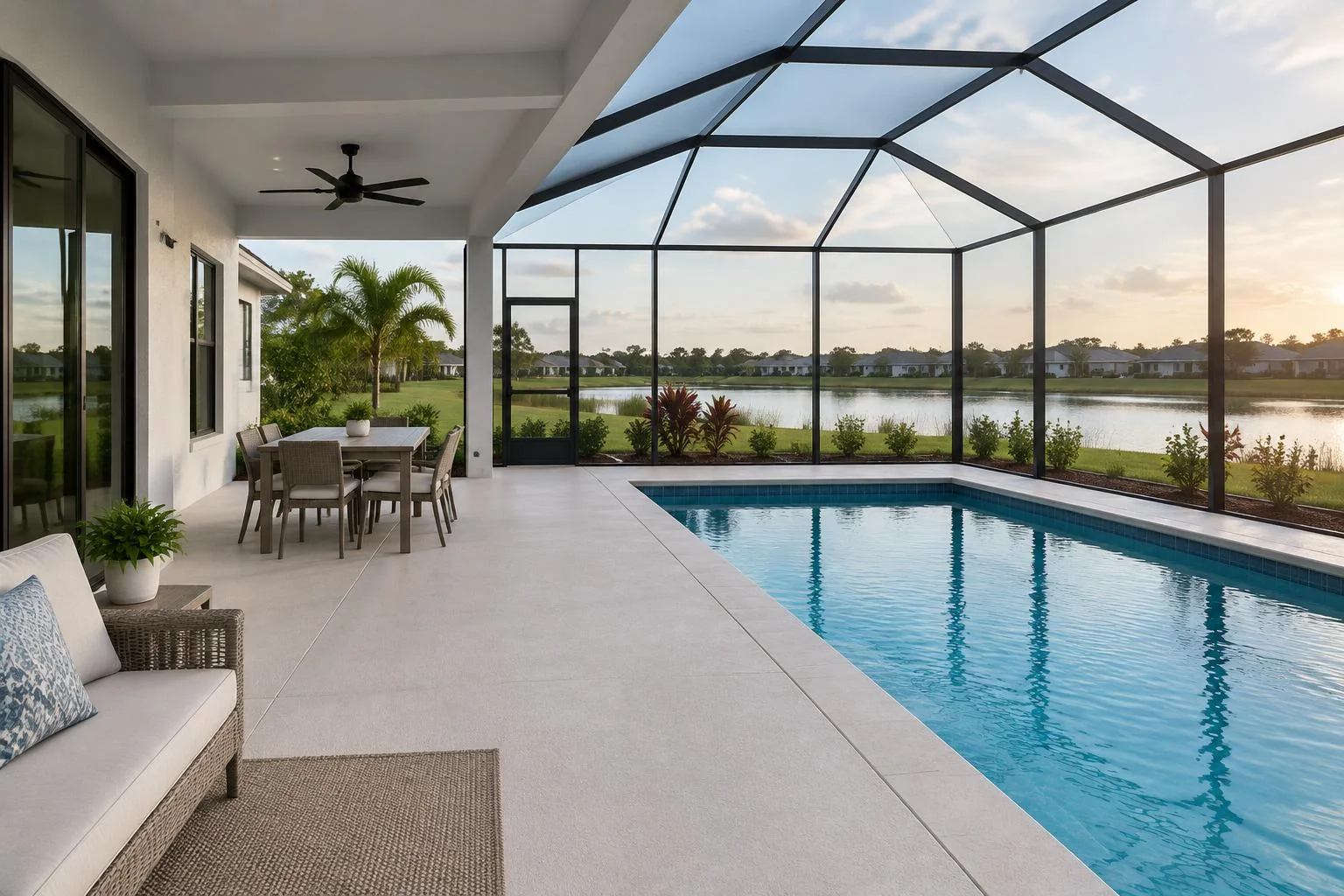
Illustrative outdoor-living imagery — not a company project or a photograph of a specific city.
Find the county resource that matches the question
Charlotte County’s Residential Cage guide and its permit requirements page serve different purposes. The cage guide describes documentation for that project category, including a site plan and drawings. The requirements page helps with the earlier question of whether a particular kind of work requires a permit. Keep both available when exploring changes to a patio or pool area; the description of the work determines which information is useful.
For example, replacing screen material and extending an enclosure footprint describe different intentions. Explain which you mean when asking the county for guidance. Include the property address and whether the proposal involves an existing enclosure, an addition or a new structure. This gives the department a more useful starting point than a broad question about “patio work.” Confirm the requirements for the actual property and scope before arranging work.
These resources also help when no immediate project is planned. A homeowner sorting inherited paperwork can use the county’s document categories to distinguish a site plan from an enclosure drawing and identify what information is still missing.
What the plans can tell you about the backyard
The Residential Cage guide asks drawings to identify whether the foundation is existing or proposed. That distinction matters when looking at a paved area beside the house: the visible surface alone does not establish its suitability for a new enclosure. Locate any available plans among your purchase or improvement records, and compare their labels with the features you recognize outside. If a drawing leaves the foundation unclear, ask what documentation is needed rather than treating the paving as proof. This is also a useful way to separate the space you already have from an expansion you may only be considering.
A waterside yard has more than one destination
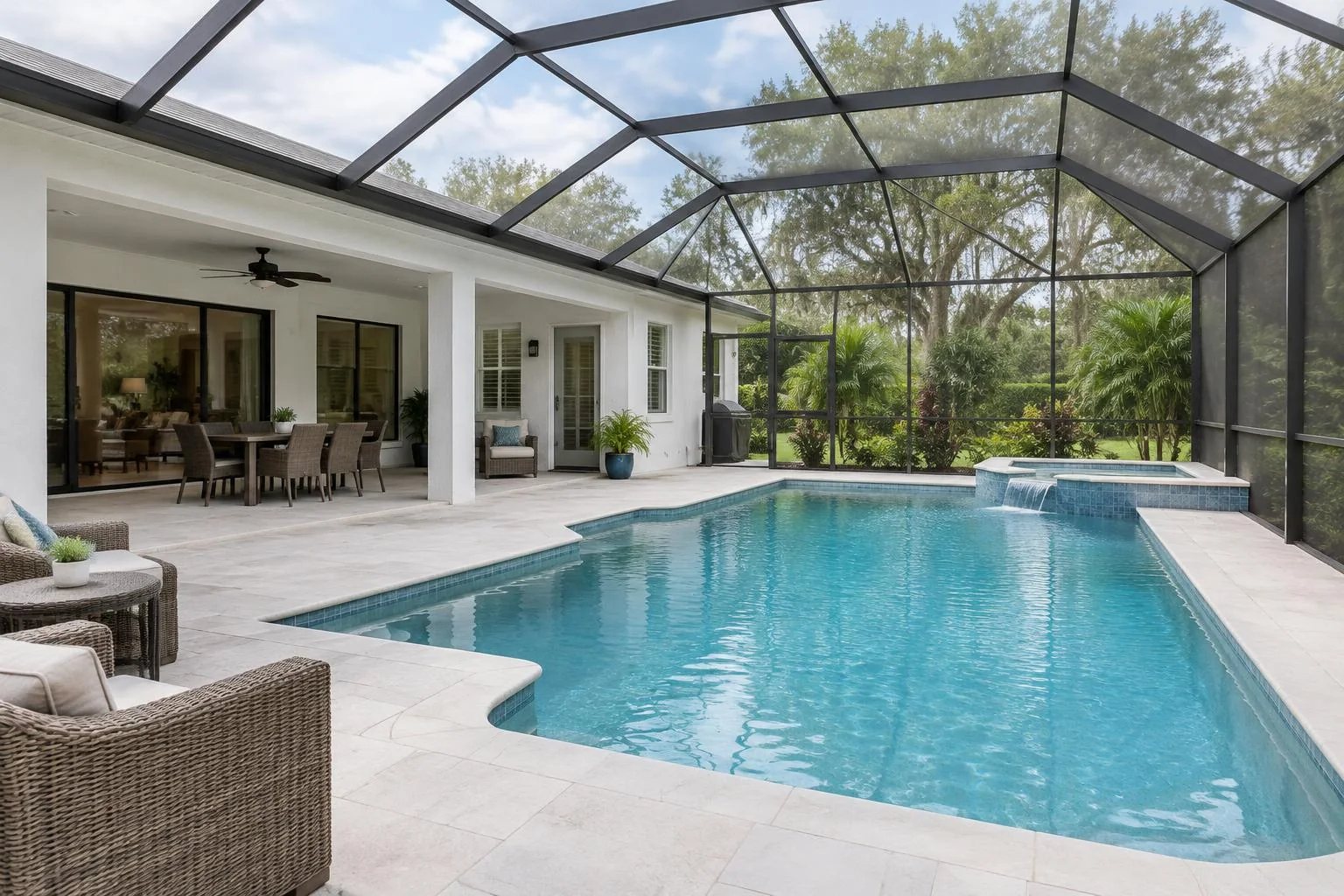
Where a Port Charlotte property borders water, a screened sitting area may share the backyard with an open space closer to the water. Treat these as connected but separate places. A comfortable table near the house and an unobstructed route across the yard may matter more than bringing every outdoor activity inside one enclosure.
Consider what should remain visible from the seating area and where people need to pass between the house and the waterside portion of the property. An enclosure door that opens conveniently onto the deck can still lead into an awkward route if furniture or planting interrupts the next few steps. Keep the route useful for someone carrying chairs or outdoor supplies, as well as for someone simply enjoying the view.
Any questions about separate waterside improvements deserve their own scope-specific inquiry. The county’s cage guide addresses an enclosure category; it should not be read as approval for everything between the back door and the water.
Non-waterfront space can put privacy first
For a backyard facing neighboring homes, a side yard or planting, the central question may be how to create a comfortable place to sit without closing off useful outdoor space. Decide which views you enjoy and which sightlines make seating feel exposed. Moving a table farther under existing cover or changing its orientation may be worth trying before altering the enclosure.
Screen mesh should not be treated as a guaranteed privacy barrier. Consider how the sitting area looks from outside as well as from the chair, especially when lights are on. If privacy is the main goal, discuss that goal explicitly rather than assuming that any screened boundary will achieve it. Preserve access to the yard and household equipment while considering furniture or planting changes.
Screening changes the boundary, not the weather
A screened lanai or pool area can help limit insect entry and some windblown debris while retaining an outdoor feel. Its comfort still depends on the cover, exposure and surroundings. An overhead screen is not a solid rain roof, and mesh alone should not be counted on to provide the shade a seating area needs. Distinguish a wish for fewer insects from a need for rain protection or greater privacy: each describes a different limitation. Keeping those expectations separate makes the county information and the choices within your existing backyard easier to use.
A practical next step
Keep the county links with your property paperwork for future questions. If a defined screening project becomes useful, All American Renovations’ Port Charlotte service page provides a separate starting point.
Port Charlotte services