
Punta Gorda homeowner notes
Connecting the House, Lanai and Yard in Punta Gorda
An outdoor room works best when it connects naturally to the rest of the home. In Punta Gorda, start by tracing the route from the house to the lanai, across the pool deck and into the yard. This guide focuses on those connections, including the extra coordination that can matter for a property within the city’s maintained canal system, without assuming every home has the same setting.
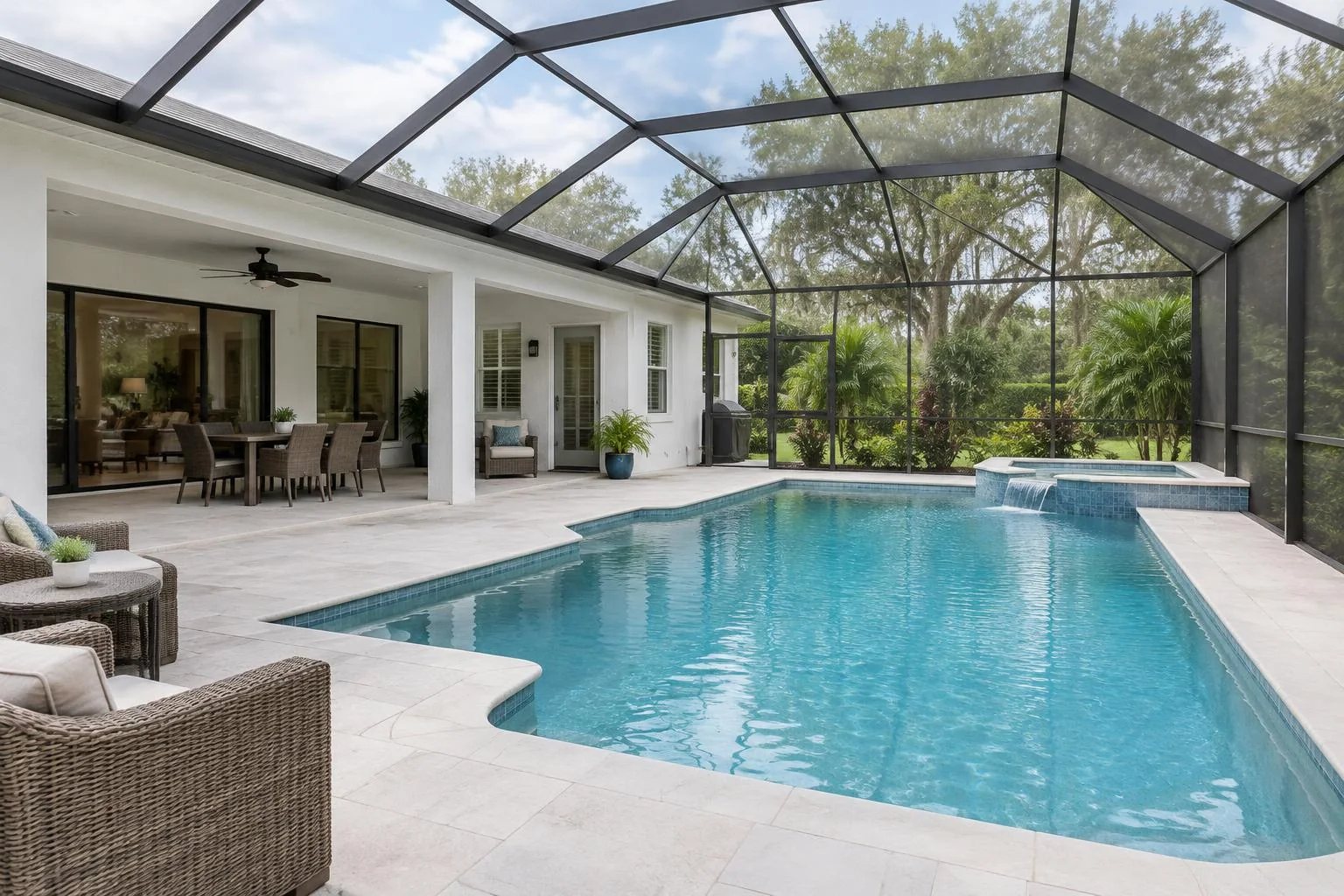
Illustrative outdoor-living imagery — not a company project or a photograph of a specific city.
For canal properties, look beyond the screen line
The City of Punta Gorda’s Canal Maintenance Division describes its work on canals and City-maintained seawalls. Its official canal page explains that residents scheduled for seawall replacement receive advance information about preparing their property. If that applies to your home, check the current instructions before planning nearby outdoor work. A screened boundary, planting bed or furniture arrangement should not be considered in isolation from access needed for a separate waterside project.
This does not mean the city maintains every waterfront feature or that every Punta Gorda address is in the same program. Confirm the status of the property and the responsibilities involved. If a seawall or canal concern is the reason you are reconsidering the yard, direct that concern to the appropriate city department rather than assuming a screening contractor can resolve it. Enclosure work and shoreline work are different conversations.
Use city resources to separate the questions
Punta Gorda’s official website has separate resources for building questions and the city’s canal work. A homeowner considering the back of the property may need one, both or neither, depending on what is being discussed. Start by naming the concern: an outdoor addition, access for a waterside project or a question about existing paperwork. That helps you reach the department whose information fits the task.
Keep any reply attached to its subject. Information about a City-maintained seawall may be important for access to the yard, but it does not describe an enclosure proposal. Similarly, a building form does not answer who maintains a waterfront feature. Finding the responsible contact for each concern allows the household to make decisions in a sensible order, with fewer unanswered questions crossing between separate pieces of work.
Check city jurisdiction before borrowing county advice
The City of Punta Gorda Building Division administers building codes and adopted construction standards within the city. Its website provides building information and a separate collection of forms. Those are practical starting points when a proposed change affects an enclosure. Confirm which jurisdiction serves the actual address, rather than assuming a Punta Gorda mailing address answers that question or that another homeowner’s county instructions apply unchanged.
Explain whether you are considering a new screened structure, modifying existing framing or addressing mesh alone. Ask which current guidance fits that description. Requirements and documents can depend on the work, so avoid planning around an unverified exemption or an old fee schedule. Where community or property-specific restrictions also apply, check those separately; a conversation about building requirements does not settle every other permission.
Let the existing house supply the starting information
For a home with an established porch, lanai or pool cage, gather any available plans, permit records and photographs before deciding what to retain. The useful distinction is not simply old home versus new home. It is which parts are documented, which parts have changed, and which features still serve the household well. Do not assume that an existing attachment or slab can support a different enclosure without review.
Look at the transition from interior flooring to the outdoor surface and the way existing cover meets the screened area. Record drainage concerns, damaged surfaces or awkward changes in level as observations for the appropriate professional. Screening does not correct every problem around a patio. Separating those issues early helps keep a mesh replacement from being mistaken for a remedy for unrelated roof, drainage or structural concerns.
Separate appearance, comfort and condition
A frame that looks tired, screening that has torn and a layout that feels inconvenient are three different observations. Record each one separately. From a safe ground-level position, note where mesh damage occurs and whether it is localized or repeated. If structural movement or loose framing is visible, avoid the affected area and arrange qualified evaluation rather than assuming a cosmetic refresh is the next step.
When mesh wear is widespread, learning what rescreening involves may help you understand a possible scope. It does not establish that your enclosure needs it. Similarly, changing the color or finish of framing is not a way to prove that the frame is sound. A useful project description explains the concern and the desired result without treating an online guide as a diagnosis.
A practical next step
For Punta Gorda homeowners, the best planning document may be a modest sketch with three notes: the route you want to keep clear, the condition you want assessed and any separate property work that needs coordination. Keep those notes together with the relevant city information. If the next question concerns a particular service, All American Renovations’ Punta Gorda page explains the available work from its Venice-based team.
See Punta Gorda service information