
Sarasota homeowner resources
Finding Property Records and Maps for Your Sarasota Home
A Sarasota lanai may be a favorite place to read or have lunch, but questions about what came with the house often lead to paperwork. An unfamiliar addition, an old drawing or a map label is easier to understand when you know where to look. Start with the address and the official record, then follow the question to the office that can answer it.
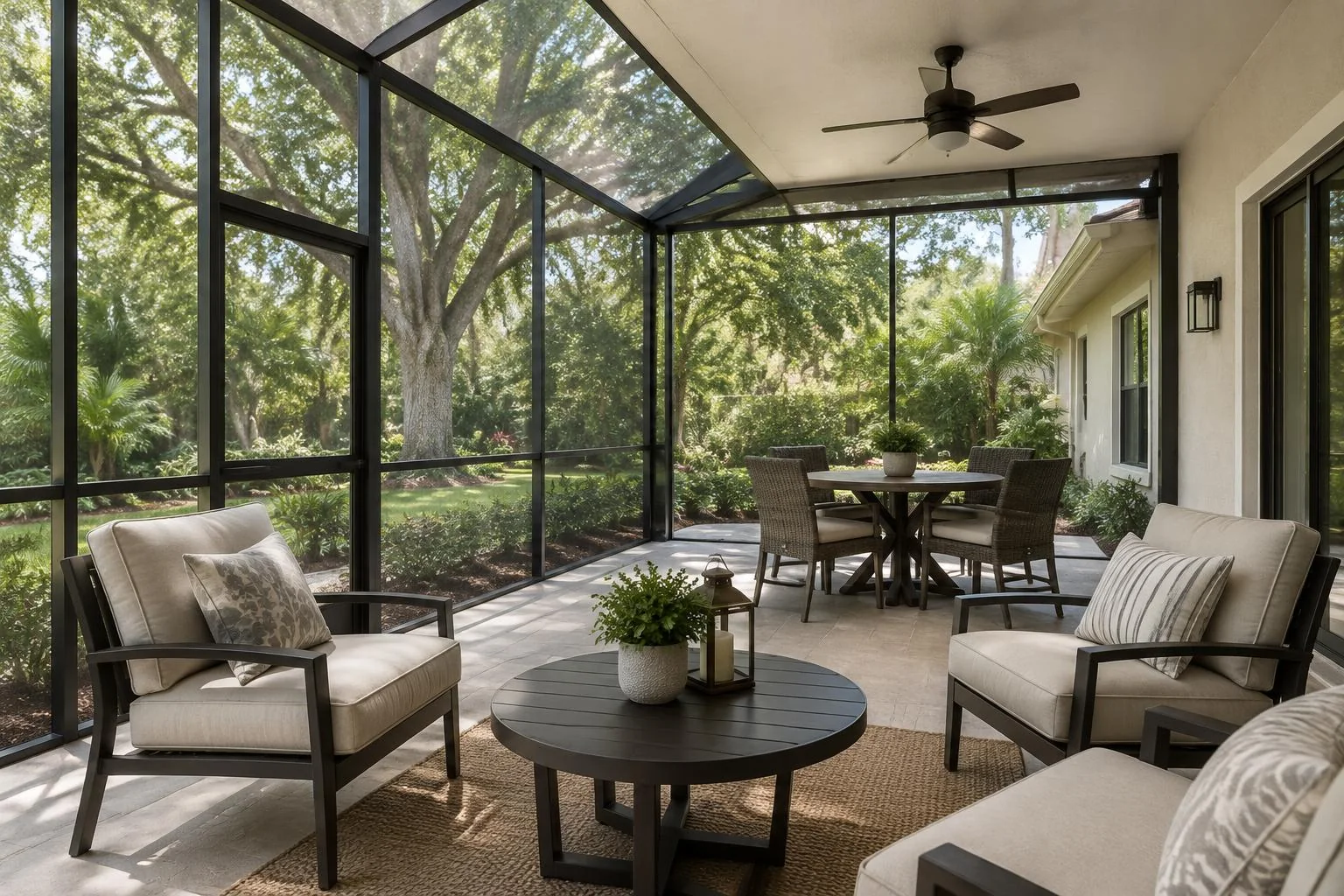
Illustrative outdoor-living imagery — not a company project or a photograph of a specific city.
Start with the address, not the neighborhood name
Before searching for a record, have the full property address available and confirm which government serves it. A Sarasota mailing address or a familiar neighborhood name is not enough to establish the office responsible for a particular property question. If that responsibility is unclear, ask the public office to confirm it before using its forms or guidance.
The City of Sarasota Building & Permitting page brings together permit information, inspection resources and property lookup links. For a home within city jurisdiction, it is a useful doorway into the available records. Begin there rather than trying several unrelated search results and hoping they refer to the same property.
Follow one property question through the records
Suppose you want to know more about the covered area outside the back door. Begin with a narrow question: is there a record describing that addition? Follow the property lookup links from the official page and use the identifying details requested by the tool. Check that the result belongs to your address before reading the project description.
Look for dates, descriptions and any documents or status information the record makes available. Read those details together. A short project title may not explain the full extent of the work, and a date may refer to one step rather than the entire history. If you cannot tell what a status means, ask the office responsible for the record.
An empty search result is a reason to ask about the search, not a conclusion about the house. Check the address format and ask whether another search method or records request would help. Tell the office what you tried so it can point you toward the next useful step.
Keep the record connected to the home
Save the source link and identifying number with any document you download. Give the file a name you will recognize later, such as the address, subject and record date. If an office answers a question by email, keep that response with the document it explains. You will be able to return to the same information without repeating the search.
Existing paperwork can also be useful when simply getting comfortable in a home. A drawing may help explain a room label or the description used in an older record. Keep the distinction between what a document shows and what you are asking about today. When something does not match your understanding, describe the difference to the office rather than rewriting the history yourself.
If you call for help, have the record open while you speak. Referring to the same number, date and description helps both of you stay with the same question and reduces confusion between similar entries.
Choose the map that answers your question
The city’s Map Information page links to flood and evacuation resources. These answer different questions. Flood-zone information concerns mapped flood hazards; evacuation-zone information supports evacuation planning. Check which kind of map you have opened before using its result.
Use the address-based resources linked from the official page, locate the property and read the legend. Save the map source and the date you consulted it along with the result. A cropped image without its legend is difficult to interpret later, especially when someone else is looking at it for the first time.
For questions about how flood information relates to proposed work, contact the responsible public office with the property address and the mapped designation. For evacuation planning, follow current official instructions. Keep those two conversations separate even if both begin on the same city resource page.
Leave room for everyday life
Good home records are useful between projects, too. Keep them somewhere accessible, then let the lanai remain a place to enjoy rather than a stack of unanswered paperwork. A reading chair, a table for lunch or a convenient place for gardening gloves can make the space feel settled while you take your time learning about the house.
When ownership changes or another family member takes over household tasks, a few clearly named files are easier to pass along than a collection of unexplained screenshots. Keep the original documents, the official links and any written clarifications together. That gives the next person a reliable starting point without requiring them to reconstruct every conversation.
A practical next step
For a specific enclosure project, All American Renovations’ Sarasota service page provides the service information. Keep official property records available for any questions about the existing home.
Sarasota enclosure service information